
Choosing a pool type is one of the most consequential decisions you’ll make in the entire pool-buying process – and in Michigan, the stakes are higher than in warmer states. Michigan’s extreme freeze-thaw cycles, clay-heavy soils, and short pool seasons put unique stresses on pool shells, equipment, and finishes.
In this guide, we break down the three major inground pool types: fiberglass, gunite (concrete), and vinyl liner – across the factors that matter most to Michigan homeowners: durability through harsh winters, total cost of ownership, design flexibility, and long-term maintenance requirements.
Understanding Michigan’s Climate Challenge
Before comparing pool types, it’s important to understand what Michigan winters actually do to a pool. In Metro Detroit, ground temperatures can drop well below freezing for extended periods. Water that seeps into porous surfaces expands when it freezes, creating pressure that can crack shells, shift coping, and damage plumbing over time.
Additionally, the spring thaw creates hydrostatic pressure – pressure from groundwater pushing upward against the pool structure. This is particularly pronounced in southeastern Michigan’s clay-rich soils, where drainage is slow, and water accumulates beneath the pool.
Every pool type handles these conditions differently, and your choice of construction method directly affects how much annual maintenance you’ll need and how long your pool will last.
Fiberglass Pools in Michigan
How They’re Built
Fiberglass pools are pre-manufactured shells – formed in a factory and delivered to your property as a single unit. A crane or specialized equipment lowers the shell into the excavated hole, plumbing connections are made, and the deck is finished around the shell.
Michigan Winter Performance
Fiberglass is widely considered the best inground pool type for Michigan’s climate, and here’s why: the gelcoat surface is non-porous, meaning water cannot seep into the shell material itself. This dramatically reduces the risk of freeze-thaw damage to concrete pools. Fiberglass pools also have a degree of natural flexibility – they can expand and contract slightly with ground movement without cracking.
Pros for Michigan Homeowners
- Non-porous surface resists algae, reducing chemical consumption by 30–50%
- Faster installation – typically 2–6 weeks vs. months for gunite
- Lower lifetime maintenance costs
- Excellent performance in Michigan’s freeze-thaw conditions
- A smooth surface is comfortable underfoot
Cons to Consider
- Limited shape and size options – you’re choosing from a manufacturer’s catalog
- Maximum width is typically 16 feet due to transportation constraints
- Gelcoat can fade or chalk over time and requires periodic refinishing
- Not ideal for highly sloped or irregular yard configurations
Gunite (Concrete) Pools in Michigan
How They’re Built
Gunite pools are built entirely on-site. A steel rebar framework is assembled in the excavated hole, then a high-pressure hose sprays a mixture of cement and sand (gunite) over the steel framework. The shell is shaped by skilled workers during the application process, giving it virtually unlimited design flexibility. After curing, the surface is finished with plaster, aggregate, or tile.
Michigan Winter Performance
Concrete is porous by nature, and Michigan winters are not kind to porous materials. Plaster and concrete surfaces can absorb water, which then freezes and expands, leading to surface cracks, delamination, and spalling over time. Proper winterization – including lowering water levels, protecting plumbing lines, and using quality winter covers – is essential for gunite pool Michigan installations.
The good news: concrete pools, when built using modern techniques and properly winterized each fall, can last 50+ years in Michigan. The key to long-term durability lies in expert pool construction practices, working with a builder experienced in cold-climate conditions, and committing to consistent maintenance throughout the year.
Pros for Michigan Homeowners
- Complete design freedom – any shape, size, depth, and feature configuration
- Highest perceived value and visual impact
- Can accommodate complex features: negative edges, grottos, swim-up bars
- Long-lasting structure when properly built and maintained
Cons to Consider
- Longest construction timeline – 3 to 6 months in Michigan’s build season
- Highest upfront and ongoing cost
- Requires resurfacing every 10–15 years ($8,000 – $20,000)
- A porous surface requires more chemicals and is more prone to algae
- Michigan winters require meticulous annual winterization
Vinyl Liner Pools in Michigan
How They’re Built
Vinyl liner pools use a steel, polymer, or aluminum wall panel frame that is assembled in the excavated hole. A custom-cut vinyl liner – typically 20–30 mil thick – is fitted over the frame and held in place by a coping track at the waterline. The liner provides the waterproof barrier and the interior finish.
Michigan Winter Performance
Vinyl liner pools occupy a middle ground for Michigan winters. The liner itself does not absorb water, which protects against freeze damage to the pool’s walls. However, liners can become brittle in cold temperatures and are vulnerable to punctures and tears. UV exposure also degrades liners over time, and Michigan’s summer sun can accelerate this process.
Vinyl liner pool Michigan winters performance is adequate with proper winterization – primarily ensuring water chemistry is balanced before closing, and the liner is protected from ice formation at the waterline.
Pros for Michigan Homeowners
- Lowest upfront cost of the three pool types
- Smooth, comfortable surface with no rough edges
- Wide variety of liner patterns and colors available
- Relatively fast installation
Cons to Consider
- Liners must be replaced every 7–12 years ($3,500 – $8,000 per replacement)
- Vulnerable to punctures from sharp objects, dog nails, and rough play
- Limited depth customization
- Resale value is typically lower than fiberglass or gunite
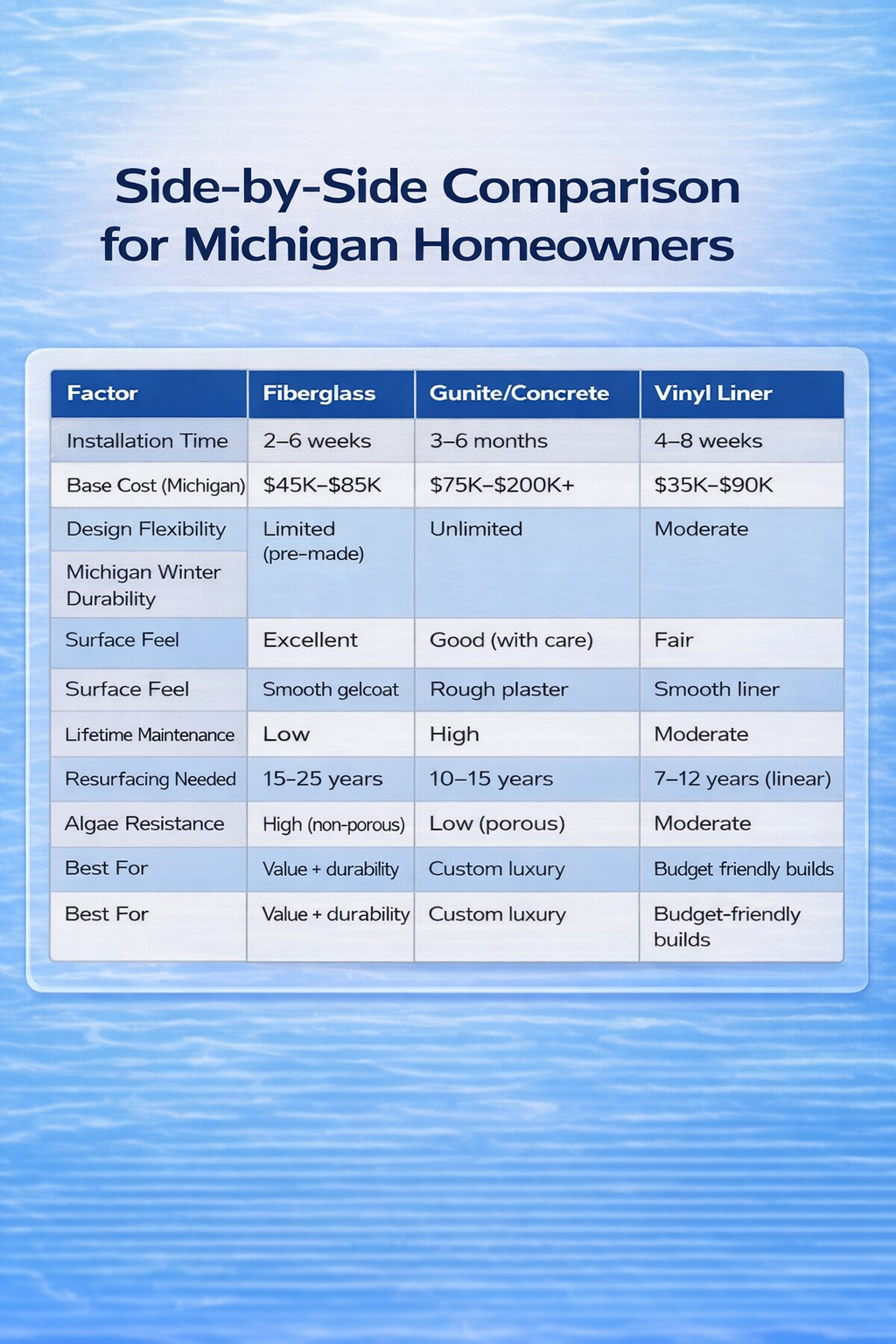
Side-by-Side Comparison for Michigan Homeowners
Which Pool Type Is Right for Your Michigan Property?
The honest answer depends on your budget, yard configuration, aesthetic goals, and tolerance for ongoing maintenance:
Choose fiberglass if: You want the lowest long-term maintenance cost, a fast installation timeline, and strong durability through Michigan winters. Ideal for families with active use patterns.
Choose gunite if: You have a custom design vision, a higher budget, and a commitment to annual maintenance and proper winterization. The best choice for luxury builds in communities like Bloomfield Hills or Grosse Pointe.
Choose vinyl liner if: You have a tighter upfront budget and understand the lifecycle costs of liner replacement. Best for homeowners who want a pool sooner and can accept periodic liner replacement costs.
A Note on Michigan Pool Builders
Regardless of which pool type you choose, selecting a contractor with proven cold-climate experience is critical. Ask potential builders specifically about their winterization protocols, their experience with Michigan soil conditions, and whether they carry proper licensing under Michigan’s builder statutes. For trusted expertise and reliable service, homeowners can consider working with Wet Custom Pools for professional guidance and quality pool construction.
Pro Tip: Request photos of previously completed pools in your area – not just glamour shots, but photos taken after 5+ Michigan winters. Real-world performance in local conditions is the most reliable predictor of long-term quality.
Frequently Asked Questions
1. How much does pool design cost in Oklahoma?
Pool design costs vary depending on complexity, features, and customization. Basic designs may start from a few thousand dollars, while high-end custom pool designs can cost significantly more.
2. What is included in a custom pool design?
Custom pool design includes layout planning, shape selection, depth configuration, material selection, and integration with landscaping and outdoor living features.
3. How long does the pool design process take?
The pool design process typically takes 1–3 weeks, depending on revisions, approvals, and project complexity before construction begins.
4. Can I customize features in my pool design?
Yes, features like waterfalls, lighting, tanning ledges, spas, and automation systems can be included in your custom swimming pool design.
5. Why is professional pool design important?
Professional pool design ensures better functionality, proper space utilization, efficient water flow, and long-term durability while enhancing your property value.