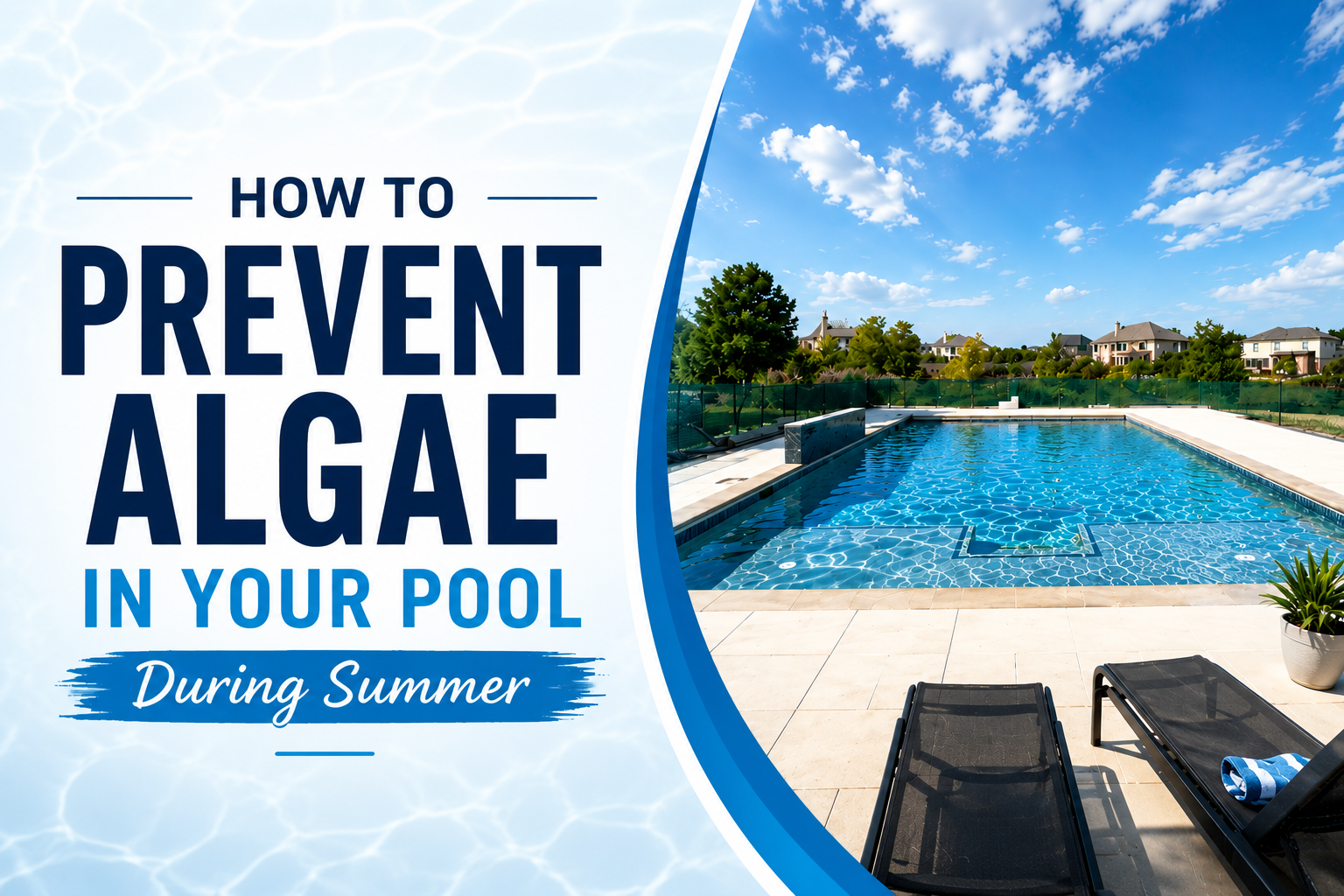
Summer is the season when your pool gets used the most. It is also the time when algae can grow faster because of heat, sunlight, rain, and frequent swimming.
At first, algae may look like a light green shade in the water or a slippery layer on the pool steps. If it is ignored, the water can quickly become cloudy, green, and unsafe for swimming.
The good news is that you can prevent pool algae with a simple routine. Regular cleaning, proper water balance, and good filtration can keep your pool clear throughout the summer.
Why Algae Grows Faster in Summer
Algae grows when pool water is warm, poorly balanced, or not moving properly. During summer, chlorine also breaks down faster because of strong sunlight and heavy pool use.
This means your pool needs closer attention than it does in cooler months. Even if the water looks clean, low chlorine or poor circulation can give algae a chance to grow.
Some common reasons algae appears include low chlorine, dirty filters, leaves in the water, poor brushing, and pump problems. Rain can also affect water balance and make the pool more likely to turn cloudy or green.
How to Prevent Pool Algae
The best way to stop algae is to stay ahead of it. Once algae spreads, it takes more time, more chemicals, and more effort to remove.
Test Your Pool Water Regularly
Testing your pool water is one of the most important steps. During summer, it is better to test the water at least two or three times a week.
Your chlorine and pH levels should stay within the right range. When pH is too high, chlorine does not work as well. When chlorine is too low, algae can start growing quickly.
If your pool gets heavy use, or if there has been rain, test the water again before swimming.
Keep the Water Moving
Pool water should circulate properly every day. Your pump and filter help move water, remove dirt, and spread chemicals evenly.
If the pump does not run long enough, some areas of the pool may not get enough circulation. These quiet areas, such as corners, steps, and behind ladders, are where algae often starts.
If your water flow feels weak or the pool keeps getting cloudy, it may be time to check your equipment or speak with a pool repair services professional.
Brush and Clean the Pool Surfaces
Even when the water looks clear, algae can stick to the walls, floor, tile line, and steps. Brushing these areas helps remove early buildup before it spreads.
Focus more on shaded areas, corners, and steps because algae grows easily where water movement is low.
Skimming leaves and debris is also important. Organic waste uses up chlorine and can make the pool harder to balance.
Simple Summer Pool Care Routine
Here is an easy routine to help prevent pool algae during summer:
This routine does not need to be complicated. The main goal is to keep the water clean, balanced, and moving.
Do Not Ignore Your Pool Filter
Your filter plays a major role in keeping algae away. It removes small particles, dirt, and debris from the water. If the filter is clogged or dirty, the pool may look dull even after adding chemicals.
A dirty filter can also reduce water flow, which gives algae more chances to grow.
Depending on your system, your filter may need cleaning, backwashing, or replacement parts. If you are not sure what your filter needs, a pool technician can inspect it and guide you.
When Should You Shock the Pool?
Pool shock can help prevent pool algae, especially during summer. It gives the water a stronger cleaning boost when normal chlorine levels are not enough.
You may need to shock your pool after a pool party, heavy rain, very hot weather, or when the water starts looking cloudy.
Always test the water before adding shock and follow the product instructions. Adding chemicals without testing can make water balance harder to manage.
Early Signs of Pool Algae
Algae is easier to handle when you catch it early. Watch for small changes in the water and pool surfaces.
Common early signs include:
- Cloudy or dull-looking water
- Slippery steps or walls
- Green patches near corners
- Yellow dust-like buildup
- Low chlorine readings
If you see these signs, clean and balance the pool right away. Waiting too long can turn a small issue into a bigger cleanup job.
Common Mistakes That Cause Pool Algae
Many algae problems happen because of small maintenance gaps. For example, some pool owners only test the water when it already looks green. Others add chlorine but forget to brush the walls or clean the filter.
Another common mistake is running the pump for too little time. Without proper circulation, chemicals cannot reach every part of the pool.
It is also important not to ignore equipment issues. If your pump, filter, or cleaner is not working correctly, algae may keep coming back even after treatment.
When to Call Professional Pool Repair Services
Sometimes algae keeps returning even when you clean and balance the water. This can be a sign of a deeper issue with your pool system.
You may need professional pool repair services if your water flow is weak, the filter pressure is unusual, the pump is noisy, or the pool turns green again and again.
A professional can check the pump, filter, valves, plumbing, and overall circulation. Fixing the root problem can save you from repeated algae treatments and extra chemical costs.
Expert Tips for a Clear Summer Pool
A clean summer pool comes from steady care. You do not have to overdo anything, but you do need to stay consistent.
Keep your chlorine stable, clean the filter on time, brush hidden areas, and test after rain or heavy use. These small steps make a big difference.
If you are going on vacation, clean the pool, balance the water, and make sure the pump schedule is correct before you leave. For longer trips, it is smart to arrange a pool service visit.
Conclusion
Algae can grow quickly during summer, but it can be prevented with the right pool care routine. Clean water, proper chemical balance, good circulation, and regular brushing all help keep algae under control.
If your pool keeps turning cloudy or green, do not keep guessing. There may be a filter, pump, or circulation issue that needs expert attention.
For dependable algae prevention, maintenance, and pool repair services, contact Wet Custom Pools and keep your pool ready for summer swimming.
Frequently Asked Questions
How often should I test my pool water in summer?
You should test your pool water two to three times a week during summer. Test it again after heavy rain, heavy swimming, or very hot weather.
Why does algae keep coming back in my pool?
Algae may keep coming back because of low chlorine, poor water balance, weak circulation, or a dirty filter. Equipment issues can also cause repeated algae problems.
Can a dirty filter cause pool algae?
Yes. A dirty filter can reduce water flow and stop the pool from filtering properly. This can make the water cloudy and create better conditions for algae growth.
Should I shock my pool after rain?
Yes, it can help. Rain can affect chlorine and pH levels, so testing and shocking the pool after heavy rain can help keep the water clear.
When should I call a pool professional?
Call a pool professional if algae keeps returning, water flow is weak, the pump is not working properly, or the filter pressure looks unusual.